Thursday, July 7, 2011

People-Tested, Animal-Approved: Revisiting the Topic of Organics

Last year I wrote a post about the benefits of organic products, the difference between "natural" and "organic," and avoiding being duped by advertising. Well, a couple days ago I came across an excellent post by Jem's Room on essentially the same topic. Their post lead me to another great post on Green Options listing "fake organics," "fake naturals," "real organics," and "real naturals." To my horror, quite a few of the products I've grown to know and love were on the fake side of things. I--a former advertising copywriter--have been duped by advertising copywriting. That's the power of advertising.

It turns out that none of my bath products were certified organic. :(

Since this low-blow, I feel that it's safe to say almost every bath, body, and beauty product on the market is harmful even for its intended use unless they are USDA Certified Organic (or international equivalent). For this reason, I am no longer going to use the term "organic" and/or "natural." Why? Because they're buzz words used by advertisers that describes some of the characteristics of a product, but not all, and clearly not accurately.


Instead, I'm going to call acceptable products "USDA's" because there's no getting around that argument. I am also going to assume and accept that nearly everything these days seems to be harmful. Simply stepping outside and breathing urban air is a frightening concept for me. But as I stated in my post many months ago, my main reason for not wanting to use products with synthetic chemicals is because of animal testing. Ethically, that is not okay in my book.


So this time I did a simple Google search and looked for a credible source for "USDA's." (My actual search was "list of USDA certified organic products.") So now I have that forum post on Green Options I linked earlier, and a directory by the Organic Consumers Association. Unfortunately, neither list seems to be maintained any longer but it's a great jumping-off point for both you and I. But then I found the motherload....


The Environmental Working Group (EWG) is a non-profit organization which advocates the regulation and removal of dangerous chemicals in consumer products. They also developed the Skin Deep Cosmetics Database which has more than 65,000 products for you to search through, each of which will tell you on a scale of 0-10 how safe your products are (0 being the safest, 10 being the most toxic).


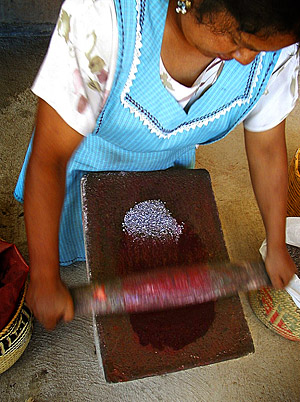
You can also search by ingredient which tells you about the ingredient in question, how safe it is, and lists all the products in their database which has that ingredient. For example, I am concerned about the use of Carmine which is perfectly safe but is derived from crushing the shells (graphic) of the Cochineal Beetle. The reddish tint is used in many different products like lipstick, eyeshadow, lollypops, and popsicles, just to name a few. There are 3,913 products listed in the Skin Deep Database that use Carmine. Gross.


That said, if you're concerned about the safety or ingredients of your soaps and whatnot, I suggest you search for it in the Skin Deep Cosmetics Database. It may just be the greatest thing since sliced bread!


If you enjoyed this entry, please check out the original People-Tested, Animal-Approved blog I wrote last year!

Monday, July 4, 2011

America the Beautiful: Celebrating U.S. conservation efforts on Independence Day

On July 4th, 1776 the congressional approval of the Declaration of Independence severed direct ties between the United States and Great Britain. Since that time, we the people have celebrated the Fourth of July with family, fireworks, beer, and barbeques as a day of appreciation for this country's freedoms and accomplishments. So before the festivities begin, read about a few other reasons to have pride in the United States as not only protectors of its values and citizens, but also of land, water, and ecology.


For Purple Mountains Majesties


Mt. Whitney has an elevation of 14,505 ft and is the highest summit in the lower 48 states. Image provided by Wallpapers-Free.org.


One of the greatest achievements of the United States is its avid protection of land for the immeasurable tangible and intangible values it brings. A pioneer in environmental conservation and Nobel Peace Prize recipient, President Theodore Roosevelt once said "A nation that destroy its soils destroys itself. Forests are the lungs of our land, purifying the air and giving fresh strength to our people." He later went on to help protect 150 National Forests with friend and colleague, environmentalist John Muir; established the National Park Service; and passed the Antiquities Act of 1906 which protects landmarks and monuments of historical or scientific value.

The National Park Service today maintains approximately 84 million square acres of land and over 4.5 million square acres of oceans, lakes, and reservoirs. They are also joined by the Bureau of Land Management which maintains approximately 643 million square acres of surface land, 247 million square acres of which is protected as public land for recreation and conservation. The U.S. Forest Service also protects more than 192 million square acres of public land, along with the U.S. Fish and Wildlife Service which manages approximately 150 million square acres of National Wildlife Refuges. These are only a few of the agencies responsible for protecting land. There are also state, local, and privately owned protected land. Seeing is believing.


'Til all Success be Nobleness


The Bald Eagle was successfully recovered and removed from the Endangered Species List in 2007. Image provided by HDWallpapers.in.
 

Beyond that of land, the United States has maintained continuous effort in protecting threatened and endangered species of both flora and fauna. Congress recognized in the Endangered Species Act of 1973 that "fish, wildlife, and plants are of esthetic, ecological, educational, historical, recreational, and scientific value to the Nation and its people." As of today the U.S. Fish and Wildlife Service lists 1,974 U.S. and foreign species as being threatened or endangered, 1,139 of which having active recovery plans. To date, the USFWS has aided in the recovery of 21 species including the Bald Eagle, American Alligator, Gray Whale, and Peregrine Falcon.

Maguire Daisy. Photo by Michelle Dela Cruz / NPS.

This year alone, we celebrate the recovery of two species: the Gray Wolf of the Northern Rocky Mountains and the Maguire Daisy. Gray Wolves are unfortunately still endangered in many other regions, but continued efforts are being made to successfully recover them. However, the Maguire Daisy was removed from the endangered species list on February 18th, 2011 and is found throughout Utah in higher elevations between 5200 and 8600 feet.


The Gray Wolf is prosperous in some regions but is still considered an endangered species. Photo by Tracy Brooks / USFWS.


From Sea to Shining Sea


Hawaiian coast. Photo provided by Blirk.net.


But none of these efforts are possible without maintaining the integrity of our water, oceans, and atmosphere. The National Oceanic and Atmospheric Administration and Environmental Protection Agency both work to improve our oceans and climate by studying resources and interpreting the results; providing cleanup and manpower for disaster relief; ensuring the safety of chemicals and their usage to prevent pollution; and passing and enforcing laws to protect people, animals, and the environment.

The EPA also manages all hazardous and non-hazardous waste and recyclables under the Resource Conservation and Recovery Act. They are responsible for ensuring that contaminants don't effect our food, water, air, land, and oceans and are constantly attempting to improve current waste management programs.


So today when you're out barbecuing, spending time with your family, and celebrating our Independence Day, I hope you think back to some of these contributions made by the United States to protect the natural beauty of this portion of our planet. Not only are you able to enjoy this country's beauty, but so will future generations that sees beyond the years.


If you're all about the United States, maybe look into footage from last year's Puppy Bowl VII, or learn more about what Los Angeles is doing to cut down on trash.

Tuesday, June 21, 2011

I now pronounce you...Eco-friendly!

Long time no blog post! My apologies to you all for my absence these last few months. I assure you that it wasn't out of pure laziness, rather it was out of being overworked by my education. Now that the semester is over and I ended it with a 4.0 semester GPA, I am back to blogging!


In other news, my fiancée and I have been engaged for about a year now and we've been really honing in on the wedding plans lately. Since ecology is important to both of us, we have been coming up with environmentally friendly alternatives to some of the more traditional wedding practices. Almost everything can be bought from organic and fair trade vendors, but knowing how to go about the details is a little tougher. Here are two of our more unusual eco-friendly wedding ideas for those of you out there who are also in the same love-boat.


The rings!


Arguably the most important icon of weddings across multiple cultures since ancient times, the ring has been on the receiving end of much criticism lately in regards to conflict diamonds, or diamonds sold to fund wars responsible for the deaths of nearly four million people. For this reason, the Kimberley Process (KP) was born which is an international government regulation to ensure that diamonds are mined and traded conflict-free. Jewelers and jewelry companies now often advertise the fact that their diamonds are conflict-free and provide credentials to their customers.

A miner in Sierra Leone holding a diamond. Photo by Yannis Kontos.  Published by the New York Times, 2006.

But for those of you who still have concerns over the integrity of diamonds, you would be happy to know that diamonds weren't always the "go to" stone for marriage. In fact, diamond wedding rings were only worn traditionally in specific cultures and often came with other gemstones and styling requirements. It wasn't until the launch of the 1947 De Beers "A Diamond is Forever" campaign in which diamonds were regarded as the gem of choice because of its properties of strength and stability not found in any other stone (a rating of 10 on the Mohs Scale). Popular alternatives to diamonds include sapphires, rubies, emeralds, and cubic zirconia, however any stone with a rating of 8 or higher on the Mohs Scale is of a desired strength for wedding rings.

If you're considering a Kimberley-certified diamond or alternative gemstone, you may also be interested in buying recycled rings or having your old unwanted jewelry made into your wedding rings by a jewelry designer. Recycled jewelry is often less expensive and since it's not generally done by large jewelry corporations, it tends to add a personal touch to it. The process involves removing any stones or beads from old jewelry, melting down the precious metals, and reforging them into a wedding band. If you have them made, you and your fiancée get to decide on the design and materials with the assistance of a jeweler while also having the comfort in knowing where all the materials came from.

This modern wedding ring from Erin Jane Designs is made from 14 kt recycled gold and a white sapphire.

So whether you have your heart set on diamonds or you're getting a feel for alternative stones, there are many ways to go about the rings without feeling guilty on your wedding day!


Register with Kindness

You may be thinking to yourself, "Gift registry? That's random!" But really, there are ways to be eco-friendly when it comes to gift registry as well. One way would be have a registry somewhere that is environmentally conscious and fair trade--that's obvious. But we're going about our registry a little differently:


8"plushy from the World Wildlife Fund.
In lieu of gifts, my fiancée and I are asking our guests to adopt an endangered species through the World Wildlife Fund. As an example, when you adopt a polar bear for $50 you'll receive a polar bear plushy and other goodies while helping a critically endangered species. Then during the reception, guests could bring their plushies and take pictures together with them. This would capture the fond memory of loved ones having shared in the conservation of endangered animals. I personally would rather have that than a blender.

Yeah, it's kinda cute...but not as cute as polar bears.


If you're considering going this route but aren't really interested in the World Wildlife Fund, there's always other organizations or fund raisers you can support. Whatever is important to you and your family is what really makes this idea special. Perhaps you have a loved one who suffers from an illness and you would like people to donate to its cause. Or maybe you're involved in your local church and would prefer donations to benefit your creed. Whatever your cause, you would be sharing something that is important to you and your fiancée with the rest of your family. (And if you still really want a new blender, you can always have an alternative registry--I promise I wont tell anyone.)


When it comes to your wedding, it's important that it represents the values of you and your fiancée. If being environmentally friendly is important to you both, there's an endless amount of things you can do for your wedding to support those values. What are some of your wedding plans?


There's at least 52 other ways you can be more eco friendly in your every day life. You can also learn the history of electric vehicles, and maybe make the switch yourself!

Monday, February 7, 2011

NASA unveils our sun in 3D

Technically speaking we sort of see the sun in 3D every day, but I'd wager that most people avoid actually looking directly at it in the first place. Except kids, of course. Remember as kids when we'd try so hard to look at the sun long enough to see some detail before going permanently blind? Or was that just me?

Well, I know I'm not alone because NASA's been trying for years! Using the Solar Terrestrial Relations Observatory (STEREO) released in 2006 NASA has been able to photograph our sun in 3D. This new technology will give NASA the ability to track and predict solar weather patterns which can be disruptive to both our technology on earth and during space exploration missions.

Watch below for the 3D footage and don't worry about going blind because you can stare at it as long as you want.


Speaking of radiation, did you know that Germany is constantly plagued by radioactive boars? But if that doesn't make you raise an eyebrow, maybe salamanders that regrow their body parts will.


Sunday, February 6, 2011

The crowd goes wild over Puppy Bowl VII

Today is the day of Superbowl XLV. But in more important news, today is also the day of Puppy Bowl VII! You may have heard of it.


Brought to you by Animal Planet, the Puppy Bowl features a to-scale football stadium where puppies of all shapes and sizes romp about and play with little toy footballs. But it's not all about the cuteness! Puppies who manage to bring their toys to the end-zone score touchdowns, and the referee even keeps track of unnecessary "ruffness" on the field.

Okay, I lied: it's definitely all about the cuteness. And just when you thought it couldn't get anymore precious, they bring you the Kitty Halftime Show where kitties purr and play under a disco ball until the puppies are ready to get back in the field. But that's about as adorable as it gets. Just kidding! They also have a film crew of hamster pilots and cheerleading chickens! Oh, the humanity!


So next year, you might want to reconsider your Superbowl party and have a Puppy Bowl party instead. Think of the puppies! I know I am.

http://animal.discovery.com/tv/puppy-bowl/


If you love puppies, you should consider adopting a new friend, or maybe switch to cruel-free health and beauty products.


Saturday, February 5, 2011

The three ARRR's, matey!

I am not sure where the waste hierarchy originated but many people have heard and follow its simple advice: Reduce, Reuse, Recycle. This concept is actually arranged in order of importance. While all three are important, environmental scientists generally agree that the #1 thing you could possibly do to help the world out as a whole is to reduce the amount of...well...everything you need. The next best thing would be to reuse what you already have. Lastly, you should recycle whatever is left over so that it can be used in other ways.

Well, it seems as though people as a whole--including myself--have been practicing the waste hierarchy backwards. I obsessively recycle just about everything I can, but it is only recently that I have learned the importance of the first two R's. I think most of us have done the basics of reducing the amount of water and energy we use: low flow toilets, energy saver bulbs, or simply turning stuff off. But there is a lot less obvious stuff out there that we can all reuse and if you think about it, reusing one thing reduces your use of other things! Here's two very easy things you can reduce and reuse:


Water Bottles
These come in a variety of forms: the traditional plastic; the trendy aluminum/stainless steel; or the progressive glass. I personally use glass water bottles because of the possible dangers and overall bad taste that comes with using plastic or metal water bottles. Glass will not leach materials from previous beverages, unlike plastic and metal ones. (Despite certain claims that they wont. If you can taste a foreign flavor in your water, it's probably due to leeching!)


Stay hydrated and look like a badass pirate while doing it! Did I mention this bottle was originally a $6 lemonade? Talk about reusing!


Still not sure about it? Consider this:

  • About 80% of plastic bottles will end up in a landfill despite the fact that about 80% of U.S. citizens have access to recycling centers.
  • Recycled plastic is usually made into carpet, clothing, new bottles, and other much-needed products.
  • Producing new products from recycled plastic uses two-thirds less energy than starting from scratch.
  • In 2008, nearly 2.5 million tons of plastic bottles and jars were thrown away.
  • Plastic photodegrades which means that it simply turns into smaller and smaller fragments. These fragments pollute soil and water and are ingested by humans and animals.
  • Tap water is tested for harmful microbiological content multiple times per day, whereas bottled water companies are only required to test their water once per week.


Shopping Bags
Unless you've been living under a rock the last 5-years or so, you might have noticed plenty of trendy old ladies bringing canvas shopping bags into grocery stores with them. Reusable shopping bags have spread like wildfire and stores now even carry them for sale which serve for both branding and shopping. But canvas bags aren't the only bags which are reusable. Plastic bags have been reusable this entire time! I've been using them in my car and for small trash bins for as long as I can remember. I've also seen dog walkers use them to pick up "land-mines" on the side of the road.


Not convinced? Maybe this will change your mind:

  • Like plastic bottles, plastic bags do not biodegrade and can be harmful to people and animals if ingested (or put over the head!).
  • Is made from fossil fuels and only tightens our grip on oil.
  • I will reiterate: Producing new products from recycled plastic uses two-thirds less energy than starting from scratch.
  • If you don't want to reuse them, plastic bags are 100% recyclable and most grocery stores these days have recycle bins for bags by the front entrance.
  • Thrift stores will more than likely also take grocery bags from you so they can use them instead. 
  • Canvas bags are pretty. See?

It's a suitcase! It's a purse! It's...a grocery bag? Yep, from Trader Joe's.


Now that you've got a head start, take a look around your house and office and think about what else you can reuse. Remember that reusing stuff isn't always just for practicality. What creative things can you think of that can be done with old clothes, dishes, glass, etc? Tell us in the comments what you came up with and stay tuned for more ways to reduce, reuse, recycle!


http://earth911.com/
http://www.bottlesandcans.com/
http://ezinearticles.com/?How-to-Reuse-Plastic-Bags&id=4658152
http://www.container-recycling.org/facts/plastic/
http://www.nrdc.org/cities/recycling/gsteps.asp
http://www.americanchemistry.com/plastics/doc.asp?CID=1581&DID=6012
http://www.p2pays.org/ref/11/10436.htm
http://www.reuseit.com/learn-more/top-facts/plastic-bottle-facts


There's at least 52 other ways you can be more eco friendly. You can also learn the history of electric vehicles, or maybe make the switch yourself!

Monday, January 31, 2011

Dumping trash in the ocean...sometimes a good thing?

By trash, I don't mean your old fast food. I'm talking about artificial reefs. This concept was brought about the discovery of vast ecosystems created by sunk ships over the centuries. Cities and organizations are now creating these ecosystems from scratch by purposefully sinking large structures made of environmentally friendly materials.

But why bother? Well, for a few different reasons. First of all, these structures promote ecological growth. The sites attract coral, fish, sea anemones, and many other marine creatures who find food and shelter here in a vast ocean.

Photograph by David Doubilet of National Geographic.

But these sites aren't just attracting fish. Divers are also plunging headfirst to get a look at these beautiful sceneries, creating tourism in otherwise drab places.

Those who have passed on have also been partaking in artificial reefs. Instead of a traditional burial, people are opting to have their ashes intermixed with eco-friendly cement and memorialized at the bottom of the sea. Since 1998, Eternal Reefs has been helping the departed leave an oceanic legacy for their families, friends, and descendants to visit for 500 years or more.

However, some biologists fear that these reefs are detracting fish from natural reefs. Since people know quite specifically where artificial reefs are or will be located, there's a huge possibility that fishermen could further destroy dwindling populations of highly desirable fish.

But for now, both authentic and artificial reefs continue to thrive throughout our underwater world.


http://ngm.nationalgeographic.com/2011/02/artificial-reefs/harrigan-text
http://www.suite101.com/content/cremated-ashes-to-artificial-reefs-a56183
http://www.bigshipwrecks.com/environment/other%20wrecks/artifReef.htm
http://www.suite101.com/content/how-do-artificial-coral-reefs-work-a159799
http://www.discover5oceans.com/2010/01/artificial-reefs-the-good-the-bad-the-controversial/
http://www.nationalgeographic.com/xpeditions/lessons/08/g912/artificialreefs.html
http://www.gomr.boemre.gov/homepg/regulate/environ/rigs-to-reefs/information.html
http://www.dnr.sc.gov/marine/pub/seascience/artreef.html


Did you know that Los Angeles is no longer the dirtiest city in the United States? In fact, they're doing some innovative things with their garbage as well.

Monday, January 17, 2011

How to calculate your ecological footprint.

It's easy! Let FootPrintNetwork.org do it for you. It's a neat little quiz where you actually have your own little avatar wandering around the environment in which it takes for you to personally live the way you do. It's eye-opening seeing different things drop on the map around you that are all necessary for your current lifestyle.

Image courtesy of ZeroWaste.ca.

I just took the quiz myself and unfortunately it would take 3.5 earths for everyone on the planet to live as I do. Not exactly the greatest results, but I'm doing my best to reduce, reuse, and recycle! Can you do better?

Don't buy your friends: rescue them!

Happy belated New Year! My apologies for my absence lately. Between the last couple months of holidays, finals, and work in general, it's been hectic trying to balance everything. Which brings me to my next topic. About a month ago I took on another endeavor: volunteering at my local animal shelter.

What you see when you first walk into the shelter I volunteer at.


I've also been paying more attention to rescue groups through Facebook such as BadRap.org and Pinups For Pitbulls. Because of my incessant link posting, a few friends of mine had a small debate regarding the right to purchase pets from breeders and pet stores rather than adopting from shelters or rescue groups. While that is obviously a person's right to do what they will with their own money, I personally feel that it is not only better to adopt but absolutely necessary to adopt.

Since I've been volunteering, I have seen many dogs and cats who have been sitting in kennels for 4, 6, 8 months or more, and while the shelter and its volunteers do so much to ensure that all of these wonderful animals are well loved and cared for, it angers me to think that there are those out there who have no qualms about funding breeders and puppy mills. People try to justify not getting a pet from a shelter because they think the animals there are sick, abused, or unwanted for "a reason." These are myths for most of these animals and those that are sick or have been abused receive socialization and veterinary care every day. Additionally, a lot of shelters (like the one I volunteer for) wont even adopt out sick animals until they are healthy again.

This topic was rekindled in my mind a couple weeks ago when I drove by a stray German Shepherd with a dead feral cat in its mouth. I called animal control hoping that after the dog's temperament was evaluated he would find a good home. It's highly unlikely though, given his situation. Why is it unlikely? Well, the Humane Society speaks on pet overpopulation, stating that six to eight million cats and dogs are brought to U.S. shelters every year. An average of four million potential pets are put to sleep in that same year. This amongst many other reasons which I will address below is why I feel adopting is necessary.


Why are puppy mills bad?

Puppy mill. Photo provided by the Animal Humane Society. If you have the stomach for it, feel free to Google image search "puppy mill" for a better idea of how they are. This image is "NC-17" enough for me.

Puppy mills are commercial businesses for the purpose of breeding dogs. They continually keep their dogs pregnant to get as many litters out of them as possible until they become infertile or die. These dogs live in disturbingly poor conditions with limited veterinary care, companionship, and space. The reason these mills continue to operate successfully is due to the sale of puppies online and in pet stores by unaware and uninformed customers. Despite every effort made by animal rights groups to stop puppy mills, they continue to remain legal in much of the United States due to loopholes.


Why are breeders bad?

First of all let me clarify that not all breeders are "bad breeders." The problem is that without seeing the conditions in which dogs are bred, it's hard to know who the good ones vs. the bad ones are. A lot of breeders, for example, are no better than puppy mills--just on a smaller scale. Also, a lot of breeders sell online and are willing to tell you exactly what you want to hear rather than the whole truth of the matter. How will you know the difference?

The main concern with breeders as a whole, including the "good ones," is that they are continuing to add to the population of domestic animals. People are attracted by the idea of breeders because they have a false sense of hope about the outcome of pure breeds or dogs simply raised in "ideal" conditions (not always the case). Unfortunately a lot of buyers regret their purchase, attempt to return their pet to no avail, and end up surrendering their pet to animal shelters.

The ASPCA itself is not against breeding dogs by any means, however they do have a Criteria for Responsible Breeding Checklist which they feel should give you an idea of what to look for when you do choose to purchase an animal from a breeder. Please do your research on breeders through the Better Business Bureau, the ASPCA, your local Animal Control facility to ensure that the breeder you are purchasing from doesn't have any complaints or abuse cases against them. Sometimes you'll even find this information online from people who have publicized their complaints on unethical and abusive breeders.


So where should I get my new companion?

Animal shelters or rescue groups, of course! Shelters provide a lot of services to you and your future pets including spaying and neutering, veterinary assistance, counseling, and significantly lower costs. Shelters also ensure that dogs are tested for temperament before being released to the public for adoption. That means that you are likely to find a dog who gets along with other dogs and children. Counselors will meet with you to assess your needs prior to adoption, and provide you with the time to get to know your future friend.

But if you really feel uncomfortable with adopting or you have your heart set on having a pure breed, please remember to do your research. If you do come across unethical treatment of animals, try to do your part to report it as well to your local Animal Control facility. It's one thing to buy your friends, but it's a whole 'nother to rescue them!

Jupiter (left--may he rest in peace) was found homeless by a couple who couldn't keep him so my mom and I loved him for many years (and still do)! We adopted Phoebe (right) from a shelter and she is now living happily ever after in Northern California with my mom, brother, and sister-in-law. 


http://www.goldendoodles.com/disreputablebreeders.htm
http://www.aspca.org/
http://www.pet-abuse.com/pages/animal_adoption.php
http://www.pet-abuse.com/pages/animal_adoption/adoption_myths.php
http://therealowner.com/dogs/why-arent-puppy-mills-illegal/

Wednesday, November 24, 2010

It's dirty in California

Los Angeles, www.forbes.com

I believe a congratulations is in order for Bakersfield who knocked Los Angeles out of the #1 spot for being the dirtiest city in the United States. With the addition of hybrid tugboats now being used in Los Angeles and Long Beach harbors, soon enough L.A. might further lower themselves on the list! Either way, it's a good thing that Proposition 23--the measure which would have suspended the environmental regulations set by AB 32 in California--didn't pass because the State of the Air 2010 reports that California already has seven out of ten of the dirtiest cities in the United States.

Following Bakersfield and L.A. is Fresno, Visalia-Porterville, Hanford-Corcoran, skipping to #8 is Modesto, and the state capital Sacramento at #9. Phoenix-Mesa, AZ is in 6th place, Birmingham-Hoover-Cullman, AL at #7, and Pittsburgh-New Castle, PA in last place. The American Lung Association came to their conclusion by evaluating ozone and particle pollution caused by vehicle emissions, industrial & agricultural pollution, wildfires, and other environmental factors. They conclude that the 20 million people who live in these regions are more likely to suffer from asthma, bronchitis, and more severe diseases such as lung cancer. If only holding your breath was a solution!


http://www.thisdishisvegetarian.com/2010/11/1127seven-out-of-ten-dirtiest-cities.html
http://www.forbes.com/2010/11/15/americas-dirtiest-cities-business-energy-dirty-cities_slide.html
http://www.lungusa.org/about-us/publications/

Tuesday, November 16, 2010

Hmm, should I torture animals or not? That's a toughie...

I seriously don't understand our species sometimes. We are the only known intelligent life in our universe (until proven otherwise) and yet some people simply cannot make rational, good decisions. While under the influence of drugs and alcohol, Englishman Colin Sherlock was arrested for torturing his pet cat Roxy by putting it into a microwave for 8 seconds, a clothes dryer for 7 seconds, a freezer for 20 seconds, and then dunking it into soapy dish water. The cat is lucky to be alive but shows signs of serious mental trauma.

So let's just make a comparison between Roxy and her previous owner.

Roxy, torture victim of Colin Sherlock.
Here's Roxy after her ordeal. She looks as though she is doing okay in still photos, but she is now extremely paranoid and and is likely to suffer lasting mental trauma. Did anyone mention that she's a cat? You can clearly see by her physique that she is indeed a cat. What could she--a cat--have possibly done to deserve to be tortured by this man:


Colin Sherlock, drug user and torturer or innocent animals.

So what now happens to Colin Sherlock? He's from England, after all, so you'd figure they'd have many medieval torture devices laying about for such an individual. Well, lucky for this man he gets the maximum penalty available: a whole 126 days in jail, and 10-year ban from owning animals. Excuse me while I golf-clap for the fellow.

What I really don't understand is why these crimes aren't taken more seriously and why the punishment for them is so minuscule. It is well known that one of the major characteristics of future serial killers is torturing animals. Instead of providing these individuals with proper care and sentences, we are essentially allowing them back on the streets to further their sadism. Whether you believe animals have rights and deserve to be protected by the law or not, would you really want this guy as your neighbor? Regardless of whether or not he feels remorse for what he has done--which he claims he does--would you want this guy living next door to you? I think not.

Thursday, October 21, 2010

People-Tested, Animal-approved

Product testing on animals isn't just about shampooing bunnies to get the shiniest coat. It involves many horrible and painful procedures such as forcing them to swallow different products to check for poisoning and side effects, or rubbing products in their eyes to check for irritation and blindness. Inevitably, animals that don't die during testing phases are later destroyed to further study via dissection. For these and other health-related reasons, I've been switching to certified organic bath & body products.

Believe it or not, it's relatively easy to find them! Most popular retail and grocery stores in the United States have at least a small section dedicated to earth and animal-friendly products. However, a lot of the products--if not all of them--aren't actually certified organic. This means you're going to have to do some research. But if you live in or near a larger city, you may find private businesses wholeheartedly dedicated to the cause who would be happy to assit you with finding certified organic soaps and scrubs. Another alternative would be to buy online. A lot of the more established businesses sell online and will deliver directly to your door.


Why is it better to have certified organic products?
Uncertified "natural" products may or may not be all that natural at all. Marketers love buzz words and will use "all-natural" and "organic" in their advertising to try to get you to purchase their products. Believe it or not, marketers can call something "all-natural and organic" as long as they aren't lying about the product's purpose, that it contains some natural ingredients, and that it has been tested to be safe for use.

Unless the item you are purchasing says it is certified organic or has a certified organic logo, you cannot guarantee that the product has not been tested on animals nor has used animal products--even if it says it's "cruel free" and "not tested on animals." Certified organic guarantees that the product does not contain any synthetic chemicals. Since it is not required by the FDA to test organic ingredients, you can relax knowing that it has not been tested on animals.

Does this mean that all uncertified "natural" products are probably unsafe or tested on animals?
Absolutely not, but it does take a little bit more research to make sure. A lot of natural products are still in the process of becoming certified, or have other reasons for not meeting certification requirements that are unrelated to their ingredients or testing procedures.

How do I make sure that my product is safe and cruel free?
The first step would be looking at the ingredients list and verifying whether they are safe and natural or not. The following list was compiled by Adam Waters, founder of Natural Skincare Authority, a website dedicated to providing easy-to-understand knowledge about natural products. These are the top 10 toxic ingredients found in over 74% of all bath & body products.

  1. Mercury: Known human carcinogen.
  2. Lead Acetate: Known human carcinogen.
  3. Formaldehyde: Known human carcinogen
  4. Toluene: Reproductive/developmental toxin
  5. Petroleum Distillates: Possible human carcinogen
  6. Ethylacrylate: Possible human carcinogen
  7. Coal Tar: Known human carcinogen
  8. Dibutyl Phthalate: Reproductive/developmental toxin
  9. Potassium Dichromate: Possible human carcinogen
  10. 2-Bromo-2-Nitropropane-1,3-Diol: Forms carcinogens if mixed with nitrosating agents

Because they are toxic, this means that they had to be lawfully tested to guarantee that there wont be any immediate harmful effects. Prolonged use does not guarantee the product's safety. Unfortunately, these are not all of the toxic ingredients found in everyday care products. If you aren't sure about an ingredient, your best bet would be to look it up.

That seems like a lot of work. Do you have a list of products that are already known to be safe?
Yes I do! I have been conducting my own research over the past few weeks to find the best, least expensive, and easiest to find bath & body products. Though I cannot guarantee 100% safety, I can guarantee that based off of their ingredients labels, these products should not contain any dangerous chemicals and therefore do not test on animals.


Burt's Bees
Burt's Bees is probably the most well known and established natural product manufacturer. They are so huge now that I've even seen their products sold in gas stations and can be found virtually in any store which sells bath & body products. Certified natural by the Natural Products Association, they have a variety of merchandise including shampoos & conditioners, lotions, food scrubs, lip gloss, etc. They even have soaps for babies and individuals with sensitive skin. Additionally, they practice sustainable company habits and announced in July 2010 that they have achieved zero waste to landfill. If only we could all achieve this!

However, Burt's Bees isn't perfect. They use synthetic ingredients when there are no natural alternatives. They are honest about it, however, and provide a percentage label of how natural their product is, i.e. 98% natural. They are also not certified organic, nor are they vegan which means they do use some animal products in their ingredients such as beeswax, lanoline, royal jelly, and milk. My only concern is their use of carmine--an extract derived from the shells of the cochineal beetle. This is used to give their lip balms a reddish tint and is literally extracted by crushing dried up beetle shells. Yum!...not.


    While you may have never heard of "him" (he used to be a him!), Dr. Bronner's has been around for over 150 years and passed down through five family generations. They have a good variety of liquid & bar soaps for your hair and body, as well as lip balm, baby soaps, and shaving cream (something that is much harder to find in a natural product). Dr. Bronner's is certified organic by the USDA National Organic Program as well as certified Fair Trade by the Institute for Marketecology (IMO). They wear their hearts--and their legal & company information--on their sleaves, and all of their merchandise is available for purchase online.

    Unfortunately, their products tend to be incredibly elusive. This may or may not be their fault, but the places that I have found them--Ralph's and Target--tend to keep their soaps out of mind and out of sight. Additionally, I have only ever found their body washes and bar soaps. I didn't even know they had more than that until going to their website. Their packaging is also a tad too preachy even for my tastes. While that doesn't prevent me from purchasing good products, they may lose a lot of customers who don't want to feel as though they are being yelled at by their shampoo!


    I can't really categorize J.R.Watkins as a bath & body company alone because they have an extensive list of products in so many different categories including hand & body creams, facials, lip balms, oils, hair care, dish soaps, furniture polish, all purpose cleaners, organic seasonings, vanilla extracts, recipes, pain relief medication, first aid, etc... the list goes on. I guess I would call them the Acme of natural products. J.R. Watkins is certified all natural by the Natural Products Association. Additionally, their herbs and spices are USDA certified organic. They also offer discounts for members of their Clear Conscious Club (free to join!), help to support over 30 non-profit organizations, use biodegradable packaging, soy-based inks, and practice strict company recycling programs. But like Dr. Bronner's, they are very hard to find in-store. Your best bet would be to buy online.


    EcoTools
    A new line of bath & beauty products released by the parent company Paris Presents, Inc., they produce exactly what it sounds like--EcoTools. These cosmetic brushes, loofahs, and other "ecotools" are made 98% to 100% from nature. But besides tools, they also have an incredibly delicious body butter (don't worry--I didn't actually eat it!), body sprays, facial scrubs, and more. Although EcoTools is not well established, I have seen their products being sold at larger chains like Ralph's, Wal*Mart, and Target so they should be easier to find. They are also doing their part by joining 1% For the Planet which donates 1% of their annual earnings to environmental organizations.

    The iffy side is that I have not been able to verify if their parent company follows the same ecological and moral guidelines as their EcoTools line. They are also Made in China, which doesn't help. While this may be okay for some, there are many controversial reasons for not wanting to purchase products from China. Also some of their fragrances, particularly in their body sprays, are overwhelmingly strong and border on obnoxious.


    Other natural or organic products:
    Sadly, I haven't been able to try out all of the great stuff I found. I simply ran out of money! The following list are other companies that I did my best to verify were either natural, organic, or on their way to becoming one of the two. I encourage you all to try your best and switch to organic and all natural products for your health, your family's health, and the health of hundreds of thousands of adorable little rodents out there.

    If you believe any of the above listed products are not in fact 100% natural or organic, or if you know of any natural and organic products you would like to see on this list, please feel free to message me personally or leave a comment with your questions or concerns.

    --------------------------------------------------------------------------------------------

    UPDATE 7/6/2011: Thanks to a blog post by Jem's Room which linked me to another blog post from GreenOptions.com, I have updated the above list of products by removing companies which are not natural nor organic despite labeling themselves as such. This post on GreenOptions.com lists Fake Organics, Fake Naturals, Real Organics, and Real Naturals based on their ingredients list on the products themselves. I encourage you to check out BOTH of their posts! *Please note that products on the list above that weren't listed at all on GreenOptions.com stayed where they are, but does not guarantee that they are truly natural and/or organic.

    Sunday, October 3, 2010

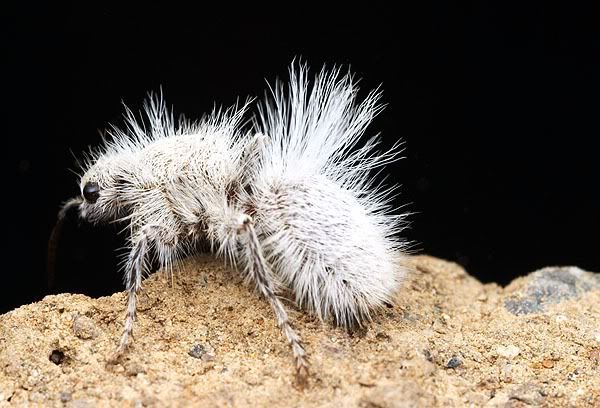
    Sunday Species: Thistledown Velvet Ant (Dasymutilla gloriosa)

    Earlier last week whilst my fiancée and I were romping through the desert, we came across this little gal:


    If you're anything like me, you let out a joyous squeal of giddy laughter when you laid eyes upon this creature. But be warned! Though the thistledown velvet ant is incredibly adorable, their cuteness is equally matched by a painful stinger.

    Female Dasymutilla Gloriosa a.k.a. "Thistledown Velvet Ant." Photographed by Alex Wilde © 2005.

    Contrary to the name, thistledown velvet ants are actually wasps. They are solitary creatures randomly dispersed throughout the arid and semiarid climates of the Southwestern United States and Mexico. As you can tell, thistledown ants have peculiar white hairs known as setae. The setae serve an impressive purpose by mimicking the hairs found on creosote seeds. This renders the thistledown ant almost entirely camouflaged amongst the varying desert debris.

    Creosote seeds. Photographed by Florian Boyd © 2007.

    Female thistledown ants spend most of their time seeking out the burrows and nests of other insects. They lay one or two eggs inside each one of these neighboring cocoons, particularly those of the sand wasp. The thistledown larvae then act as external parasites and feed off of the sand wasp larvae until adulthood. However, invading other insects' homes can be dangerous work which is why they are equipped with a hard, almost impenetrable exoskeleton and a debilitating stinger. Don't worry too much though because they aren't poisonous and they'll only really effect other insects and small animals.

    A closeup of a female thistledown stinger. Photographed by Alex Wilde © 2005.

    But like all wasps, males trade in their stinging abilities for wings. The males are mostly nocturnal and live out their lives seeking food and mates. But because they don’t have a stinger, they are easy catches for other nocturnal flying species such as bats and owls. To avoid detection from predators, male and female thistledown ants alike are skilled in burrowing themselves underground. On the off chance that they are caught, they let out an alarming call which sounds like a high-pitched squeak and can be distracting to predators.

    Adults are primarily vegetarians and drink the nectar of various species of cactus flowers, aiding in pollination. However, it is necessary for velvet ant larvae to feed off the larvae of other insects. This means that velvet ant survival is wholly dependant on the survival and reproduction of other insects. Though they are not currently an endangered species, they are quite elusive so population densities are hard to determine and they are always fascinating to come across!


    http://www.enature.com/fieldguides/detail.asp?recNum=IS0292
    http://www.myrmecos.net/insects/DasyGlor1.html
    http://www.myrmecos.net/insects/DasyGlor3.html
    http://farm1.static.flickr.com/192/475719143_c5c0f92a82.jpg
    http://bugguide.net/node/view/159/
    http://insects.tamu.edu/fieldguide/cimg344.html
    http://www.thegreenacresranch.com/Pages/wildlifecreatures.html
    http://www.sdnhm.org/fieldguide/inverts/dasymutilla.html
    Bees, Wasps, and Ants: The Indispensable Role of Hymenoptera in Gardens by Eric Grissell Pages 162-165
    http://books.google.com/books?id=TO2t6OpG304C&pg=PA163&lpg=PA163&dq=thistledown+velvet+ant+limited+by&source=bl&ots=ybkyjC2Scv&sig=I1kzG-QNqZHkwNMEd-Rr9yjFboY&hl=en&ei=RdKfTPiTE4P7lwe0zdTsAg&sa=X&oi=book_result&ct=result&resnum=8&ved=0CCsQ6AEwBw#v=onepage&q=thistledown%20velvet%20ant&f=false
    http://www.desertusa.com/mag01/feb/papr/ant.html
    http://staffwww.fullcoll.edu/lvincent/Vinc11-99Velv.htm

    Thursday, September 9, 2010

    What to do with all that garbage?


    A typical landfill. Photo courtesy of The Evirosax Blog.


    A power plant in Long Beach, CA is setting an example for LA County where they intend to build an additional three more power plants which will turn trash into energy. Nicknamed “biorefineries,” these plants would burn trash to produce heat or use microorganisms which eat through organic matter, emitting powerful methane.

    Proponents of biorefineries explain that this would cut down our dependence on non-renewable landfills currently being filled by 33,000 tons of garbage per day in LA County alone. Additionally, it will increase our power production using a renewable source of energy. However, critics suggest that this may add to air pollution and are no different than 1970’s toxic incinerators. Emissions expert of UC Riverside Bill Welch disagrees, explaining that the technology is highly sophisticated and has been effective in reducing waste and producing energy overseas. Other benefits include compost and ash byproducts which could be used for fertilizer and paving roads.


    Tuesday, August 3, 2010

    Attack of the Radioactive Boars!

    Screencapture of a Plagued Swine, World of Warcraft
    Ever since the Chernobyl Disaster of 1986 in which nuclear fallout overwhelmed most of Europe and western Soviet Union, Germany has had an ever increasing amount of radioactive boars plaguing society. It may sound like the student cinematography of an Alfred Hitchcock enthusiast, but reports of radioactive boars attacking people in the streets and blocking traffic have been numerous as of late.

    The rising amount of radioactive boars is reportedly due to the overall increase of the boar population itself. While radioactivity in the area has been steadily declining, the boar's staple diet consists of truffles and mushrooms which absorb radiation like a sponge.

    Io9.com user "Motionmonk" jokes about the positive side of radioactive boars, suggesting that since radiation transfers heat they could feasibly produce self-cooking bacon. (Rejoice!) However, due to the contamination of the meat the German Atomic Energy Law requires all boars be checked and hunters compensated for those which do not pass the test. Sorry, ladies and gentlemen, no self-cooking bacon this time!


    http://www.spiegel.de/international/zeitgeist/0,1518,709345,00.html
    http://io9.com/5601326/radioactive-wild-boar-are-costing-german-officials
    http://www.foxnews.com/scitech/2010/08/03/radioactive-boars-rampaging-germany/
    http://www.jlab.org/div_dept/train/rad_guide/effects.html

    Sunday, July 25, 2010

    Sunday Species: the Mexican Axolotl

    The Mexican Axolotl has always been one of those strange creatures I've come to know and love. I even had a pet axolotl as a child. I wish I had a picture of him to share with you!

    Unfortunately, the axolotl has been facing devastation from polluted waters and disease to being considered a delicacy in its homeland. Living exclusively in the Xochimilco lakes with a population of over 1500 per square mile, they have dwindled down to a staggering 25 per square mile and are now a critically endangered species.


    Axolotls rarely undergo complete metamorphosis and keep their larval characteristics such as gills and dorsal fins. But these undeveloped axolotls will still live full lives anywhere from 10-15 years and grow up to a foot long. Because it is rare for them to fully develop, most of these salamanders spend their whole lives living underwater. However, some will eventually descend from the depths onto land and become full adult axolotls.

    These fascinating creatures are the most studied salamanders in the world due to their regenerative abilities. This means that they can re-grow lost body parts like arms, legs, and tails. Scientists have even determined that they are able to regenerate heart and brain cells and studying the species has vastly contributed to the research of regenerative medicine.


    Even Happy Aquarium supports the Axolotl!


    Sunday, July 11, 2010

    Sunday Species: the Apache Cicada

    I apologize for the long hiatus from posting. For my absence, I decided to start a new posting schedule, one of which will introduce a new species of plant or animal every Sunday. Today, I introduce to you the Apache cicada.


    Having lived in the San Francisco Bay Area for most of my life, I didn't get much interaction with cicadas. I still don't but I am definitely made aware of their presence by their buzzing. When I first moved to Palm Springs, I didn't even know they were in this territory. That buzzing I heard all the time, I simply thought was bad wiring. I remember ignorantly commenting to my fiance about how Palm Springs should really fix their electrical systems. He promptly corrected me and told me that no, those are cicadas. Today, they reminded me that they were back this summer, and in force! Driving down the street with my windows open, every tree hummed with joy.

    The Diceroprocta Apache cicada lives in the southwest region of the United States. Like all typical cicadas, they live as nymphs underground and feed on roots and tree sap, only to come out once every 3-years to mate and eventually die. Here in the Sonoran Desert area, the Apache cicadas have overlapping "schedules" so are heard (but seldom seen) in the early summer every year. 

    Much to many peoples' surprise, the Apache cicada is able to survive harsh temperatures out in the open by sweating the nectar it feeds on. This allows for them to have as much opportunity to mate as possible during their short adult lives. As the males buzz for hours on end throughout the day and night, the females are attracted to the sound and are able to continue the cycle of life. Then about two weeks later, the buzzing ends and we look forward to a new chorus next summer. Until next time, Apache cicada!


    Picture from AmazingNature.us
    http://amazingnature.us/insects/utah_cicada2.html